
Project: Westown development
Location: Shongweni, Durban
Area: 48,500-50,00m²
Date: end March 2025
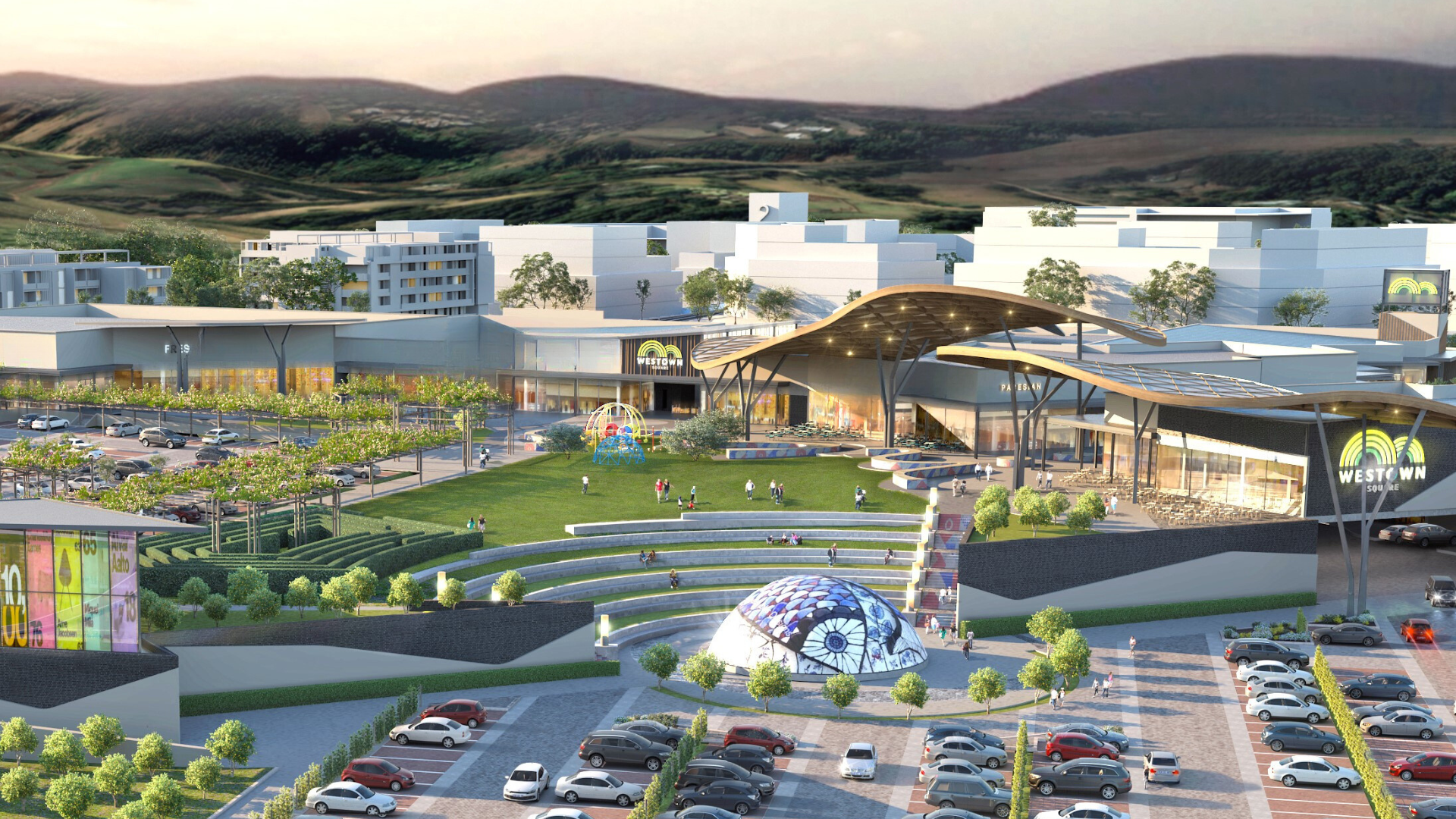
Westown is more than a development — it’s Durban’s latest urban ambition given physical form Tucked into the rolling green folds of Shongweni on the N3 corridor between Durban and Pietermaritzburg, Westown positions itself as a contemporary mixed-use precinct that stitches together retail, residential, medical, business and recreational programmes into a single, walkable place. The aspiration is big: transform the Outer West into a genuine destination — a “New City of the West” — and the first phase, Westown Square, already offers a clear signal of intent.
At its heart Westown is deliberately mixed-use. The precinct planners have secured development rights for roughly 520,000 square metres of bulk floor area across more than 100 hectares, a scale that makes Westown one of the most significant new-build urban opportunities in KwaZulu-Natal in recent years. That capacity sets a long runway for retail, logistics, apartments, health care and business parks to grow together rather than as isolated projects. It’s an important distinction — Westown is being sold not as a single building but as an ecosystem where each element supports the others.
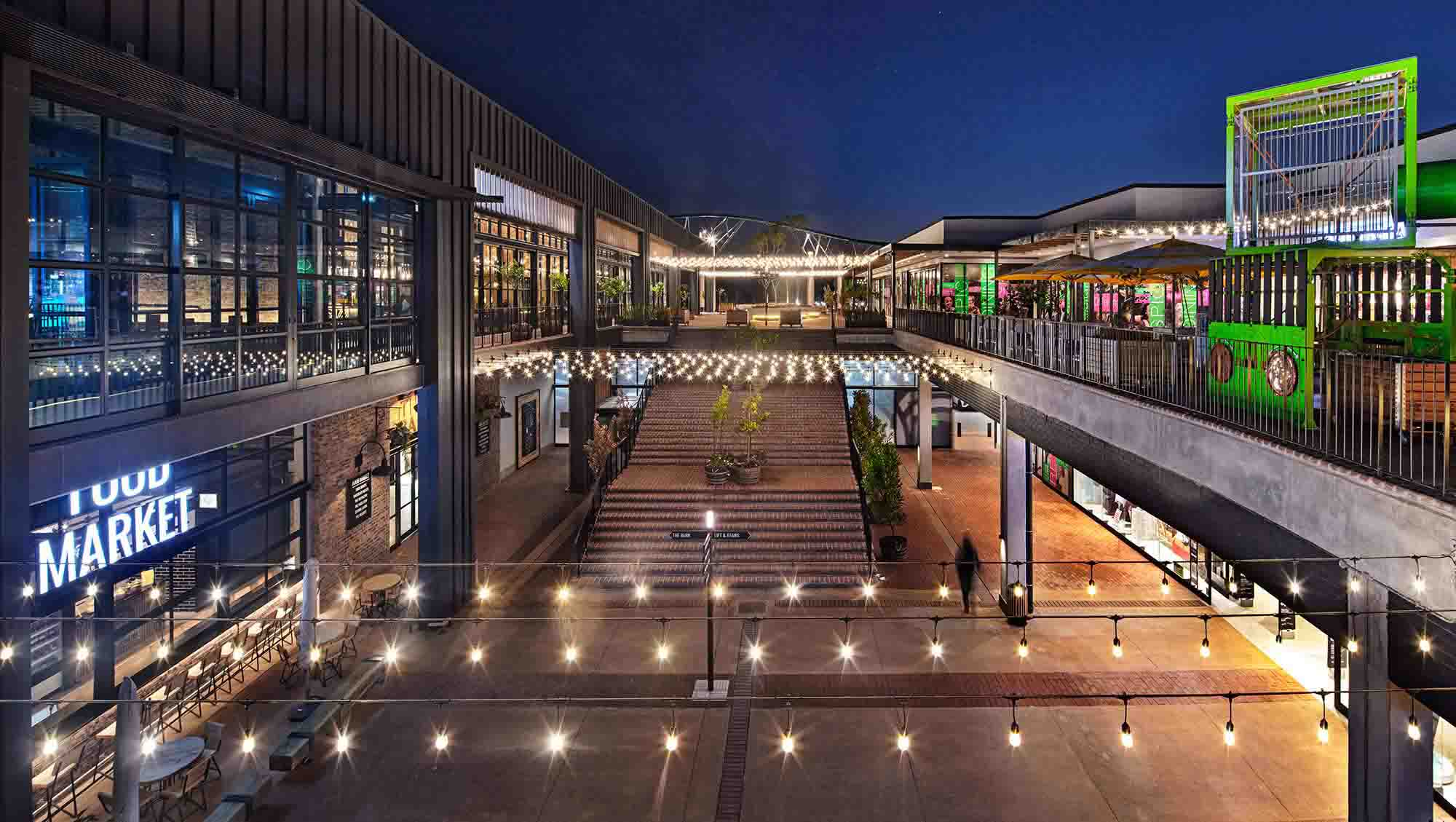
Westown Square, the catalytic first phase, is the most visible expression of that ecosystem. Opened in late March 2025, the high-street, open-air retail precinct spans roughly 48,500–50,000 square metres and intentionally breaks with the traditional enclosed mall typology. Instead of a cavernous interior, Westown Square embraces landscaped town gardens, a central amphitheatre called The Bowl, and The Barn — an artisanal market concept that stitches local makers and food vendors into the retail mix. The resulting atmosphere feels less like a transactional mall and more like a contemporary town centre where leisure and retail overlap.
Architecturally and spatially, Westown Square is notable for how it responds to context. The buildings are scaled and articulated to acknowledge the surrounding valley landscapes; walkways are densely planted and shaded by pergolas, and the planning nods to outdoor lifestyle habits popular in the area — mountain biking, trail running and family outings. This is retail designed for experience, with daylight, landscape and programmatic variety used as anchors to keep people in the space rather than funnel them through short shopping trips. It’s a subtle but important pivot from purely consumption-driven design toward place-making.
The development team behind Westown reads like a who’s who of contemporary South African property delivery. Fundamentum Property Group is the developer driving the precinct forward, and the professional list on the flagship phases includes MDS Architecture and Boogertman + Partners on Westown Square, Sculpt Spaces on The Barn, Stefanutti Stocks as main contractor, and a range of consultants from landscape architects to engineering teams. That depth of professional input helps explain why the project feels carefully staged and why municipal collaboration — notably significant infrastructure investment by eThekwini Municipality — has been central to the launch.
Beyond bricks and mortar, Westown’s strategic value is economic. The project is being positioned as a catalyst for R-scale investment in the area, promising thousands of construction jobs and a sustained uplift in commercial activity as the precinct phases roll out. For the city, it is also a test of suburban densification done well: can new hubs be created between major metros that deliver both local services and wider regional value? Early indicators — tenant interest, the quality of the professional team, and the municipality’s infrastructure commitments — suggest this proposition has weight.
No large development is without questions. The long-term success of Westown will hinge on transport connectivity and whether the precinct can genuinely integrate with local communities rather than acting as a gated attractor for car-borne shoppers. The surrounding roads and the promised bypasses are being upgraded, but the day-to-day usability by people who live nearby will be a critical litmus test. Likewise, programming beyond the opening launch — festivals in The Barn, active management of public spaces, and a tenant mix that supports both convenience and discovery — will determine whether Westown becomes a habitual destination or a novelty that fades after opening season. westown.co.za
In summary, Westown is a purposeful and polished attempt to build a new kind of regional city node outside Durban. It’s ambitious in scale, modern in its retail thinking, and supported by a credible professional team and municipal backing. If the precinct can sustain its public-space energy, weave in local social and transport networks, and execute subsequent phases with the same care shown in Westown Square, the development could genuinely recast the Outer West’s urban grammar — transforming hillside fields into a layered, living place that people both need and want to visit. For anyone tracking South Africa’s evolving urbanism, Westown is a project to watch.